logo
Wuhan Desheng Biochemical Technology Co., Ltd
상품
/

상품

HEPES 7365-45-9: Buffer Selection in Low-Temperature Enzymology Studies

제품 세부 정보

원래 장소: 후베이

브랜드 이름: desheng

인증: ISO9000

모델 번호: CAS 7365-45-9

지불 및 배송 조건

최소 주문 수량: 20kg

가격: Detailed discussion

포장 세부 사항: 20kg / box

배달 시간: 5일

지불 조건: L/C, D/P, T/T, 웨스턴 유니온

공급 능력: 5T/주

최상의 가격을 얻으세요
지금 연락하세요
사양
강조하다:

High purity reagent

,

Analytical pure reagent

,

Highly water-soluble reagent

모습:
백색 분말
모델:
hepes
제조업체:
Desheng
포장:
500g / box
모습:
백색 분말
모델:
hepes
제조업체:
Desheng
포장:
500g / box
설명
HEPES 7365-45-9: Buffer Selection in Low-Temperature Enzymology Studies

In life science experiments, the selection of biological buffers directly impacts the accuracy and reproducibility of experimental results. Typically, buffer systems are applied under conditions set at room temperature or higher to align with enzymes' optimal pH range. However, when experimental conditions shift to low temperatures, the performance of many traditional buffers may exhibit significant fluctuations, leading to reduced pH stability and consequently affecting the structural integrity and functional activity of enzymes. Against this backdrop, HEPES buffer stands out as a noteworthy solution in low-temperature enzymology research due to its unique temperature adaptability.


Product Name

4-Hydroxyethylpiperazine ethanesulfonic acid

Chemical Abbreviation

HEPES buffer

CAS Number

7365-45-9

Product Appearance

White crystalline powder

Molecular Weight

238.305

Molecular Formula

C8H18N2O4S

Density

1.07 g/mL at 20 °C

Melting Point

234-238 °C

Storage Conditions

Room temperature, away from light and moisture

Purity

More than 99%

Standard Packaging

500g/bottle, 25kg/cardboard drum

Manufacturer

Hubei Xindesheng


Special requirements for buffering agents in low-temperature experiments


Biochemical experiments under low temperature conditions, such as enzyme kinetics studies, protein purification, or low-temperature preservation techniques, require buffer systems to not only maintain stability within a specific pH range, but also avoid severe pH drift caused by temperature changes. Some commonly used buffering agents undergo significant changes in their dissociation constants when the temperature decreases, leading to a shift in the predetermined pH environment. This may disrupt the natural conformation of the enzyme, reduce its catalytic efficiency, and even cause denaturation. Therefore, selecting a buffer with a low temperature coefficient, that is, maintaining a relatively constant pH during temperature changes, has become a key step in the design of low-temperature experiments.


HEPES 7365-45-9: Buffer Selection in Low-Temperature Enzymology Studies 0

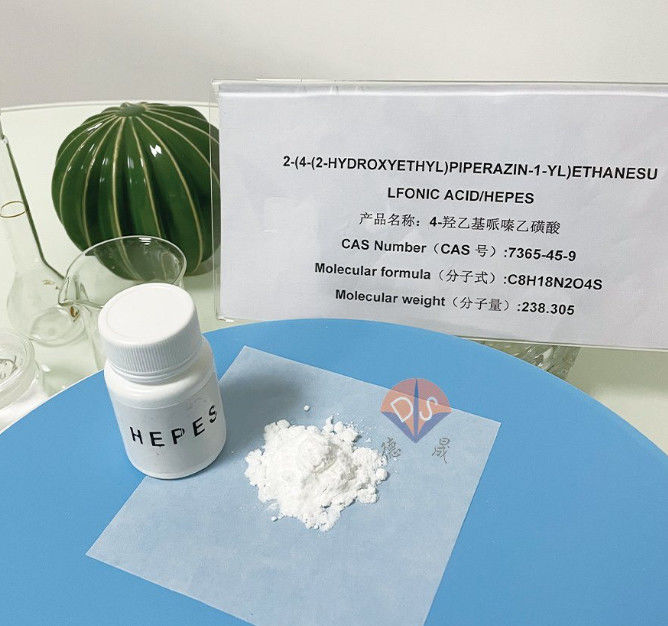
HEPES powder


The temperature stability advantage of HEPES buffer solution


HEPES is a zwitterionic buffer with an effective buffering range typically between pH 6.8 and 8.2, widely used in cell culture, biochemical analysis, and molecular biology experiments. Compared to other buffer systems, a prominent characteristic of HEPES is that its dissociation constant varies less with temperature. This means that HEPES buffer can maintain a relatively stable pH environment at both room temperature and low temperature, providing a mild and continuous reaction medium for enzymes.


The application value in low-temperature enzymology


In low-temperature enzymatic research, the application of HEPES buffer can support the maintenance of enzyme structure and the normal functioning. For example, in some experiments that require low-temperature treatment of enzymes to study their thermal stability or folding mechanism, HEPES provides a reliable buffering environment, avoiding interference factors introduced due to buffer system failure. In addition, the low metal ion binding properties of HEPES also reduce competitive binding with enzyme active centers, further ensuring the functional integrity of the enzyme.


Suggestions for use in experiments


In order to fully utilize the advantages of HEPES under low temperature conditions, it is recommended to accurately prepare the buffer solution before the experiment and use a calibrated pH meter to adjust the pH at the experimental temperature to correct for any minor effects that may be caused by temperature. At the same time, optimizing the concentration and ion strength of the buffer solution based on specific enzyme characteristics and experimental requirements can further enhance the experimental results. It is worth noting that HEPES buffer should avoid coexistence with strong oxidants or reducing agents and be stored under appropriate conditions to maintain its long-term stability.


Summary


In summary, HEPES buffer has shown significant value in low-temperature enzymatic research due to its pH stability under temperature changes. Compared to other buffering agents, HEPES can better maintain the structure and function of enzymes in low-temperature environments, providing reliable support for life science experiments. In the future exploration of low-temperature biotechnology, HEPES is expected to continue to play its unique role in promoting the development and innovation of scientific research.


HEPES 7365-45-9: Buffer Selection in Low-Temperature Enzymology Studies 1

Product packaging


As a HEPES buffer manufacturer, Desheng strictly monitors product quality and sets up a quality department to inspect batches of products. Only after the packaging and quality meet the standards can they be sold from the factory. Therefore, Desheng has received unanimous praise from customers. If you have any relevant intentions, please click on the website to inquire about details and purchase!

문의사항 보내주세요
요청사항을 보내주시면 최대한 빨리 답변하겠습니다.
보내